Quick Summary Scale with Precision: Managing 500+ guests requires a venue with at least 25,000 square feet of flexible space. Location Matters: Proximity to Saskatoon John G. Diefenbaker International Airport (YXE) reduces transit friction for national delegates. The S.T.R.E.A.M. Team: How we manage flow, technology, and catering. Tech Integration: Large-scale events in 2026 require high-density Wi-Fi and hybrid-ready AV infrastructure. Culinary Logistics: Transitioning hundreds of guests from sessions to banquets requires strategic foyer utilization. Accommodation Efficiency: On-site room blocks eliminate the need for secondary shuttle logistics. The primary goal of planning a large-scale event is to maintain a seamless experience while scaling numbers from an intimate gathering to a massive production. Whether you are hosting a national summit or a provincial association meeting, the logistics of managing 200 to 500+ guests involve complex moving parts that smaller venues cannot accommodate. Choosing the right large-scale conference venues in Saskatoon ensures that your registration flow, breakout sessions, and gala dinners occur without the bottlenecks that frustrate attendees. This guide provides a factual, data-driven look at how to scale your event success by focusing on site selection, technical infrastructure, and local Saskatoon considerations. The Anatomy of a High-Capacity Event Venue When evaluating conference centers for 500+ guests, the first metric is usable square footage versus total square footage. A venue might claim high capacity, but if the pillars obstruct sightlines or the foyer cannot hold the entire group during a coffee break, the event will feel cramped. The Saskatoon Inn & Conference Centre offers over 26,000 square feet of newly renovated space. This allows for a "hub and spoke" layout where the central ballroom serves as the anchor for keynotes, while surrounding meeting rooms handle specialized tracks. This layout is essential for Saskatoon event planning logistics, as it minimizes the time guests spend walking between sessions. The S.T.R.E.A.M. Team Effort for Large-Scale Logistics To manage the complexities of 500+ attendees, we exercise what could be commonly referred to as the Saskatoon Total Resource & Event Alignment Method (STREAM). This approach ensures no logistical element is overlooked: Spatial Allocation: Assigning square footage based on "elbow room" requirements for different session types (classroom vs. theatre). Technical Redundancy: Ensuring back-up power and secondary internet lines are active for live-streamed keynotes. Regional Integration: Leveraging local Saskatoon vendors and airport proximity to reduce shipping and travel costs. Environmental Flow: Mapping the physical movement of 500 people to prevent hallway congestion. Aesthetic Consistency: Ensuring branding remains visible and professional across all 26,000 square feet. Menu Scalability: Selecting banquet options that maintain quality and temperature when served at scale. Saskatoon-Specific Considerations for 2026 Saskatoon has evolved into a premier destination for corporate event management in Saskatoon due to its central Canadian location. However, local factors play a significant role in your planning. Transit and Accessibility For national organizations, the proximity to the airport is a non-negotiable logistical factor. Choosing a venue near the airport allows delegates to transition from their flight to the conference floor in under ten minutes. This eliminates the need for expensive downtown shuttle services and reduces the "travel fatigue" associated with long commutes to the venue. Climate and Indoor Transitions Given the Saskatchewan climate, large-scale events must prioritize venues where all activities—sleeping, dining, and conferencing—can happen under one roof. The versatile Saskatoon conference spaces and room layouts at our facility allow guests to move from their group guest room blocks to the main stage without ever stepping outside, which is a major comfort factor for winter or early spring bookings. Technical Infrastructure and AV Integration In 2026, a conference is no longer just a physical event; it is a digital broadcast. Event technology and AV for large groups must support high-definition streaming, interactive polling, and simultaneous translation if necessary. Feature Requirement for 200 Guests Requirement for 500+ Guests Wi-Fi Bandwidth Standard Business Grade High-Density Dedicated Fibre Audio 2–4 Wireless Mics 8+ Mics with Digital Mixing Console Visuals Dual 75" Monitors Large-Format LED Walls or Dual Projectors Power Standard Wall Outlets Dedicated Circuits for Production Hybrid Support Basic Webcam Setup Multi-Camera Broadcast Suite Ready to start planning? Request a consultation for your 2026 conference. The Logistics of Catering and Floor Flow One of the most difficult Saskatoon event planning logistics challenges is the "Quick Flip." This is when a room must be transitioned from a plenary session to a banquet hall in under 90 minutes. For catering for large corporate events, the menu must be designed for speed without sacrificing the "full-service" feel. Using corporate banquet menus designed specifically for scale ensures that the last person served receives a meal as hot and fresh as the first person. Managing the 500-Person Coffee Break The coffee break is the ultimate test of a venue’s foyer. To prevent 500 people from forming a single, slow-moving line: Use four-sided "Island" stations in the center of the foyer. Separate beverage stations from food stations by at least 20 feet. Utilize the on-site business center area as an overflow lounge for networking. Dynamic Crowd Management: The Science of "The Flow" When hosting 500+ guests, the transition between sessions is where most logistical failures occur. In a large-scale setting, a simple hallway can become a bottleneck that delays your entire schedule. To mitigate this, we utilize Event Flow Mapping (EFM). This process involves analyzing the "dwell time" in high-traffic areas like the Tropical Garden and the foyer outside the main ballroom. By designating specific "Express Lanes" for guests moving to breakout rooms and "Social Zones" for those lingering over coffee, you can maintain a 500-person transition in under 10 minutes. This is particularly vital for Saskatoon event planning logistics, where the efficiency of your schedule directly impacts the perceived value of the conference for high-level executives. A Step-by-Step Timeline for Scaling Success Planning for 500+ guests requires a longer lead time than smaller meetings. Follow this chronological checklist to stay on track. 12–18 Months Out: Foundation Confirm venue availability for your preferred dates. Secure a guest room block for at least 60% of your expected attendance. Review the venue’s floor plans to ensure the largest room can accommodate 500 people in your desired seating style. 6–9 Months Out: Programming Finalize keynote speakers and their technical riders. Open early-bird registration to gauge interest. Contract a local Saskatoon AV provider or confirm the venue’s in-house capabilities. 3 Months Out: Detail Management Conduct a site visit to walk the "Guest Path" from the lobby to the session rooms. Finalize banquet menus, ensuring options for diverse dietary requirements. Confirm the bandwidth capacity for your specific event dates. 1 Month Out: Final Logistics Lock in final registration numbers. Submit the final floor plan to the catering and setup teams. Prepare the digital components of the event (apps, polling, streaming). Common Mistakes in Large-Scale Planning Underestimating Registration Space: If you have 500 people arriving within a 60-minute window, two registration desks will cause a massive backlog. You need a dedicated foyer with at least five check-in stations. Ignoring "Dead Zones": In a room for 500, the people in the back rows often feel disconnected. You must include delay speakers and large-format screens to keep the back of the room engaged. Inadequate Power: Modern attendees carry 2.5 devices on average. A room for 500 requires significantly more charging infrastructure than a standard ballroom provides. Poor Signage: In full-service conference hotels in Saskatoon, guests can get lost between the restaurant and the meeting wing. Digital signage is a requirement for 2026. What To Do If Something Goes Wrong Even with the best planning, large-scale events face unpredictable challenges. Here is how to handle the most common issues: AV Failure during Keynote: Always have a "Slide deck on a thumb drive" and a secondary laptop connected and synced. If the primary feed dies, the switch should take less than 10 seconds. Attendance Exceeds Room Capacity: If late registrations push you over the 500-mark, work with the venue to set up a "Live Stream Overflow" in a smaller adjacent room or the versatile conference spaces nearby. Catering Delay: If the kitchen is running behind, keep the bar open or extend the networking session in the foyer. Communication with the emcee is vital here to manage the audience’s expectations. The Importance of On-Site Amenities For the best Saskatoon hotels for business conferences, the amenities outside of the meeting room are just as important as the AV. When 500 people stay on-site, they need access to high-quality food and fitness options without leaving the property. The Saskatoon Inn & Conference Centre offers a unique tropical courtyard that serves as a mental "reset" for delegates between intense sessions. This type of environment is backed by productivity research, which suggests that natural light and greenery reduce conference fatigue. For more information on national standards for event planning, you can consult Discover Saskatoon (Conventions) or read the latest on global trends at Event Manager Blog by Skift. FAQ Q: What is the maximum capacity for conferences at the Saskatoon Inn? A: The Saskatoon Inn & Conference Centre features over 26,000 square feet of space, with our largest ballroom capable of hosting up to 500+ guests, depending on the seating configuration. We offer 18 flexible meeting rooms to accommodate various breakout needs. Q: Do you offer specialized AV support for hybrid conferences? A: Yes, we provide modern AV infrastructure designed for 2026 standards, including high-speed dedicated internet for streaming and professional audio-visual setups. Our team can coordinate with your external providers or manage the technical requirements in-house. Q: Is there enough parking for 500 conference delegates? A: We offer extensive on-site parking for all guests and event attendees. Our location near the Saskatoon Airport also makes it easy for out-of-town delegates to arrive via taxi or rideshare, reducing the need for personal vehicle storage. Q: Can you accommodate complex dietary restrictions for large banquets? A: Our culinary team is experienced in managing large-scale catering while addressing various dietary needs, including gluten-free, vegan, and allergy-specific requirements. We recommend finalizing these details 30 days before your event. Q: How do guest room blocks work for large conferences? A: We offer dedicated group guest room blocks to ensure your attendees stay on-site. This simplifies logistics, as delegates can move easily between their rooms and the conference wing without external transportation. Q: What is the closest airport for national delegates? A: We are located just minutes away from the Saskatoon John G. Diefenbaker International Airport (YXE). This makes our venue the most convenient option for large-scale conferences involving national or international travellers. Conclusion Scaling an event to 500+ guests is a feat of engineering as much as it is a feat of hospitality. By focusing on the logistics of large-scale conferences, prioritizing airport accessibility, and utilizing proven, structured frameworks and methods, you can ensure a professional and seamless experience. The key is to choose a venue that understands the specific demands of high-capacity events—from high-density Wi-Fi to rapid catering turnovers. If you are ready to elevate your next corporate gathering, our team is here to help you navigate every technical and logistical detail. Contact us today to lock in your event dates and experience the premier conference destination in Saskatoon.
Large-Scale Conference Venues in Saskatoon: The Logistics of Scaling Success for 500+ Guests

By Published On: February 28, 2026

Quick Summary

  • Scale with Precision: Managing 500+ guests requires a venue with at least 25,000 square feet of flexible space.
  • Location Matters: Proximity to Saskatoon John G. Diefenbaker International Airport (YXE) reduces transit friction for national delegates.
  • The S.T.R.E.A.M. Team: How we manage flow, technology, and catering.
  • Tech Integration: Large-scale events in 2026 require high-density Wi-Fi and hybrid-ready AV infrastructure.
  • Culinary Logistics: Transitioning hundreds of guests from sessions to banquets requires strategic foyer utilization.
  • Accommodation Efficiency: On-site room blocks eliminate the need for secondary shuttle logistics.

The primary goal of planning a large-scale event is to maintain a seamless experience while scaling numbers from an intimate gathering to a massive production. Whether you are hosting a national summit or a provincial association meeting, the logistics of managing 200 to 500+ guests involve complex moving parts that smaller venues cannot accommodate. Choosing the right large-scale conference venues in Saskatoon ensures that your registration flow, breakout sessions, and gala dinners occur without the bottlenecks that frustrate attendees. This guide provides a factual, data-driven look at how to scale your event success by focusing on site selection, technical infrastructure, and local Saskatoon considerations.

The Anatomy of a High-Capacity Event Venue

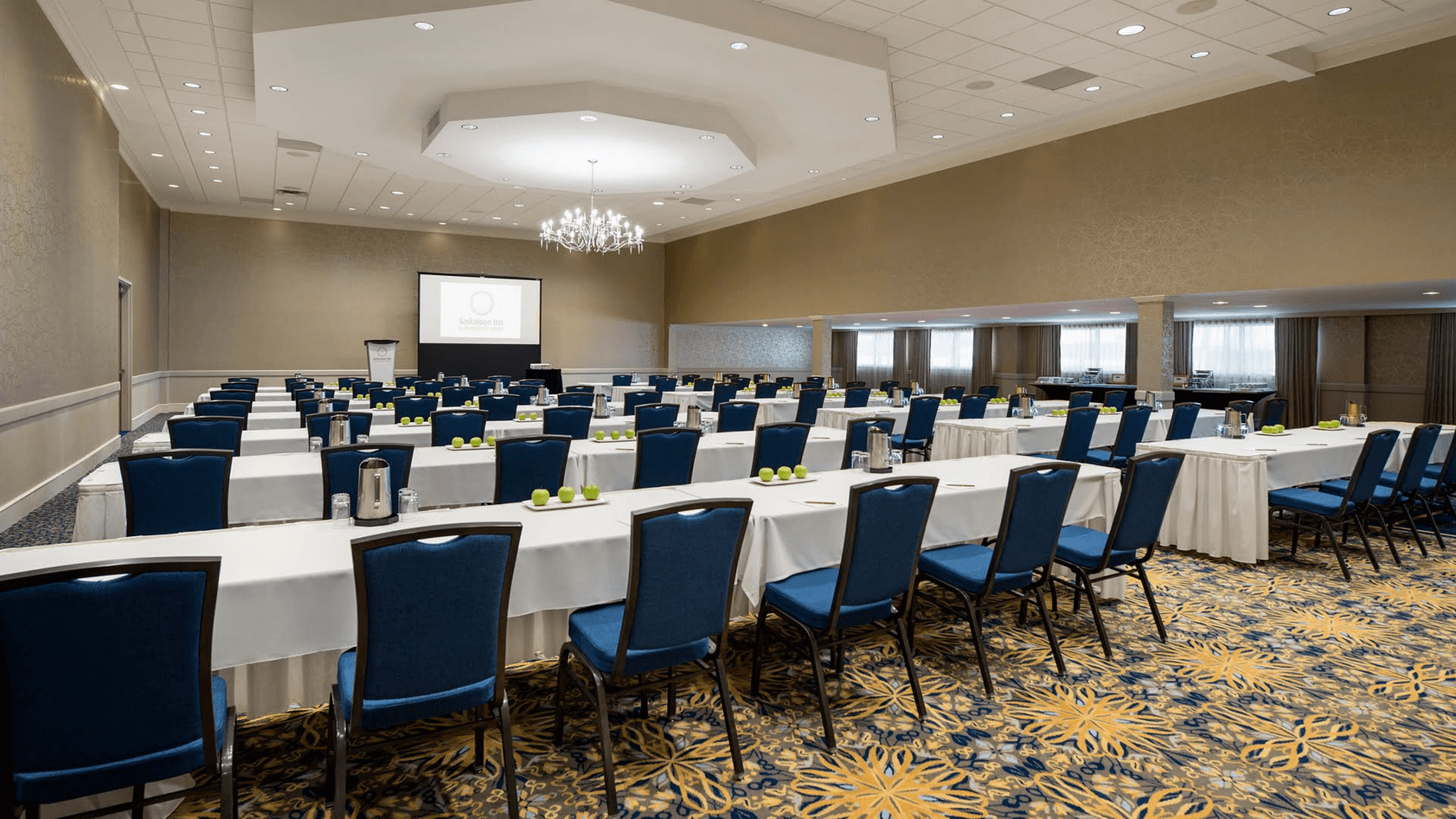
When evaluating conference centers for 500+ guests, the first metric is usable square footage versus total square footage. A venue might claim high capacity, but if the pillars obstruct sightlines or the foyer cannot hold the entire group during a coffee break, the event will feel cramped.

The Saskatoon Inn & Conference Centre offers over 26,000 square feet of newly renovated space. This allows for a “hub and spoke” layout where the central ballroom serves as the anchor for keynotes, while surrounding meeting rooms handle specialized tracks. This layout is essential for Saskatoon event planning logistics, as it minimizes the time guests spend walking between sessions.

The S.T.R.E.A.M. Team Effort for Large-Scale Logistics

To manage the complexities of 500+ attendees, we exercise what could be commonly referred to as the Saskatoon Total Resource & Event Alignment Method (STREAM). This approach ensures no logistical element is overlooked:

  1. Spatial Allocation: Assigning square footage based on “elbow room” requirements for different session types (classroom vs. theatre).
  2. Technical Redundancy: Ensuring back-up power and secondary internet lines are active for live-streamed keynotes.
  3. Regional Integration: Leveraging local Saskatoon vendors and airport proximity to reduce shipping and travel costs.
  4. Environmental Flow: Mapping the physical movement of 500 people to prevent hallway congestion.
  5. Aesthetic Consistency: Ensuring branding remains visible and professional across all 26,000 square feet.
  6. Menu Scalability: Selecting banquet options that maintain quality and temperature when served at scale.

Saskatoon-Specific Considerations for 2026

Saskatoon has evolved into a premier destination for corporate event management in Saskatoon due to its central Canadian location. However, local factors play a significant role in your planning.

Transit and Accessibility

For national organizations, the proximity to the airport is a non-negotiable logistical factor. Choosing a venue near the airport allows delegates to transition from their flight to the conference floor in under ten minutes. This eliminates the need for expensive downtown shuttle services and reduces the “travel fatigue” associated with long commutes to the venue.

Climate and Indoor Transitions

Given the Saskatchewan climate, large-scale events must prioritize venues where all activities—sleeping, dining, and conferencing—can happen under one roof. The versatile Saskatoon conference spaces and room layouts at our facility allow guests to move from their group guest room blocks to the main stage without ever stepping outside, which is a major comfort factor for winter or early spring bookings.

Technical Infrastructure and AV Integration

In 2026, a conference is no longer just a physical event; it is a digital broadcast. Event technology and AV for large groups must support high-definition streaming, interactive polling, and simultaneous translation if necessary.

Feature Requirement for 200 Guests Requirement for 500+ Guests
Wi-Fi Bandwidth Standard Business Grade High-Density Dedicated Fibre
Audio 2–4 Wireless Mics 8+ Mics with Digital Mixing Console
Visuals Dual 75″ Monitors Large-Format LED Walls or Dual Projectors
Power Standard Wall Outlets Dedicated Circuits for Production
Hybrid Support Basic Webcam Setup Multi-Camera Broadcast Suite

Ready to start planning? Request a consultation for your 2026 conference.

The Logistics of Catering and Floor Flow

Quick Summary Scale with Precision: Managing 500+ guests requires a venue with at least 25,000 square feet of flexible space. Location Matters: Proximity to Saskatoon John G. Diefenbaker International Airport (YXE) reduces transit friction for national delegates. The S.T.R.E.A.M. Team: How we manage flow, technology, and catering. Tech Integration: Large-scale events in 2026 require high-density Wi-Fi and hybrid-ready AV infrastructure. Culinary Logistics: Transitioning hundreds of guests from sessions to banquets requires strategic foyer utilization. Accommodation Efficiency: On-site room blocks eliminate the need for secondary shuttle logistics. The primary goal of planning a large-scale event is to maintain a seamless experience while scaling numbers from an intimate gathering to a massive production. Whether you are hosting a national summit or a provincial association meeting, the logistics of managing 200 to 500+ guests involve complex moving parts that smaller venues cannot accommodate. Choosing the right large-scale conference venues in Saskatoon ensures that your registration flow, breakout sessions, and gala dinners occur without the bottlenecks that frustrate attendees. This guide provides a factual, data-driven look at how to scale your event success by focusing on site selection, technical infrastructure, and local Saskatoon considerations. The Anatomy of a High-Capacity Event Venue When evaluating conference centers for 500+ guests, the first metric is usable square footage versus total square footage. A venue might claim high capacity, but if the pillars obstruct sightlines or the foyer cannot hold the entire group during a coffee break, the event will feel cramped. The Saskatoon Inn & Conference Centre offers over 26,000 square feet of newly renovated space. This allows for a "hub and spoke" layout where the central ballroom serves as the anchor for keynotes, while surrounding meeting rooms handle specialized tracks. This layout is essential for Saskatoon event planning logistics, as it minimizes the time guests spend walking between sessions. The S.T.R.E.A.M. Team Effort for Large-Scale Logistics To manage the complexities of 500+ attendees, we exercise what could be commonly referred to as the Saskatoon Total Resource & Event Alignment Method (STREAM). This approach ensures no logistical element is overlooked: Spatial Allocation: Assigning square footage based on "elbow room" requirements for different session types (classroom vs. theatre). Technical Redundancy: Ensuring back-up power and secondary internet lines are active for live-streamed keynotes. Regional Integration: Leveraging local Saskatoon vendors and airport proximity to reduce shipping and travel costs. Environmental Flow: Mapping the physical movement of 500 people to prevent hallway congestion. Aesthetic Consistency: Ensuring branding remains visible and professional across all 26,000 square feet. Menu Scalability: Selecting banquet options that maintain quality and temperature when served at scale. Saskatoon-Specific Considerations for 2026 Saskatoon has evolved into a premier destination for corporate event management in Saskatoon due to its central Canadian location. However, local factors play a significant role in your planning. Transit and Accessibility For national organizations, the proximity to the airport is a non-negotiable logistical factor. Choosing a venue near the airport allows delegates to transition from their flight to the conference floor in under ten minutes. This eliminates the need for expensive downtown shuttle services and reduces the "travel fatigue" associated with long commutes to the venue. Climate and Indoor Transitions Given the Saskatchewan climate, large-scale events must prioritize venues where all activities—sleeping, dining, and conferencing—can happen under one roof. The versatile Saskatoon conference spaces and room layouts at our facility allow guests to move from their group guest room blocks to the main stage without ever stepping outside, which is a major comfort factor for winter or early spring bookings. Technical Infrastructure and AV Integration In 2026, a conference is no longer just a physical event; it is a digital broadcast. Event technology and AV for large groups must support high-definition streaming, interactive polling, and simultaneous translation if necessary. Feature Requirement for 200 Guests Requirement for 500+ Guests Wi-Fi Bandwidth Standard Business Grade High-Density Dedicated Fibre Audio 2–4 Wireless Mics 8+ Mics with Digital Mixing Console Visuals Dual 75" Monitors Large-Format LED Walls or Dual Projectors Power Standard Wall Outlets Dedicated Circuits for Production Hybrid Support Basic Webcam Setup Multi-Camera Broadcast Suite Ready to start planning? Request a consultation for your 2026 conference. The Logistics of Catering and Floor Flow One of the most difficult Saskatoon event planning logistics challenges is the "Quick Flip." This is when a room must be transitioned from a plenary session to a banquet hall in under 90 minutes. For catering for large corporate events, the menu must be designed for speed without sacrificing the "full-service" feel. Using corporate banquet menus designed specifically for scale ensures that the last person served receives a meal as hot and fresh as the first person. Managing the 500-Person Coffee Break The coffee break is the ultimate test of a venue’s foyer. To prevent 500 people from forming a single, slow-moving line: Use four-sided "Island" stations in the center of the foyer. Separate beverage stations from food stations by at least 20 feet. Utilize the on-site business center area as an overflow lounge for networking. Dynamic Crowd Management: The Science of "The Flow" When hosting 500+ guests, the transition between sessions is where most logistical failures occur. In a large-scale setting, a simple hallway can become a bottleneck that delays your entire schedule. To mitigate this, we utilize Event Flow Mapping (EFM). This process involves analyzing the "dwell time" in high-traffic areas like the Tropical Garden and the foyer outside the main ballroom. By designating specific "Express Lanes" for guests moving to breakout rooms and "Social Zones" for those lingering over coffee, you can maintain a 500-person transition in under 10 minutes. This is particularly vital for Saskatoon event planning logistics, where the efficiency of your schedule directly impacts the perceived value of the conference for high-level executives. A Step-by-Step Timeline for Scaling Success Planning for 500+ guests requires a longer lead time than smaller meetings. Follow this chronological checklist to stay on track. 12–18 Months Out: Foundation Confirm venue availability for your preferred dates. Secure a guest room block for at least 60% of your expected attendance. Review the venue’s floor plans to ensure the largest room can accommodate 500 people in your desired seating style. 6–9 Months Out: Programming Finalize keynote speakers and their technical riders. Open early-bird registration to gauge interest. Contract a local Saskatoon AV provider or confirm the venue’s in-house capabilities. 3 Months Out: Detail Management Conduct a site visit to walk the "Guest Path" from the lobby to the session rooms. Finalize banquet menus, ensuring options for diverse dietary requirements. Confirm the bandwidth capacity for your specific event dates. 1 Month Out: Final Logistics Lock in final registration numbers. Submit the final floor plan to the catering and setup teams. Prepare the digital components of the event (apps, polling, streaming). Common Mistakes in Large-Scale Planning Underestimating Registration Space: If you have 500 people arriving within a 60-minute window, two registration desks will cause a massive backlog. You need a dedicated foyer with at least five check-in stations. Ignoring "Dead Zones": In a room for 500, the people in the back rows often feel disconnected. You must include delay speakers and large-format screens to keep the back of the room engaged. Inadequate Power: Modern attendees carry 2.5 devices on average. A room for 500 requires significantly more charging infrastructure than a standard ballroom provides. Poor Signage: In full-service conference hotels in Saskatoon, guests can get lost between the restaurant and the meeting wing. Digital signage is a requirement for 2026. What To Do If Something Goes Wrong Even with the best planning, large-scale events face unpredictable challenges. Here is how to handle the most common issues: AV Failure during Keynote: Always have a "Slide deck on a thumb drive" and a secondary laptop connected and synced. If the primary feed dies, the switch should take less than 10 seconds. Attendance Exceeds Room Capacity: If late registrations push you over the 500-mark, work with the venue to set up a "Live Stream Overflow" in a smaller adjacent room or the versatile conference spaces nearby. Catering Delay: If the kitchen is running behind, keep the bar open or extend the networking session in the foyer. Communication with the emcee is vital here to manage the audience’s expectations. The Importance of On-Site Amenities For the best Saskatoon hotels for business conferences, the amenities outside of the meeting room are just as important as the AV. When 500 people stay on-site, they need access to high-quality food and fitness options without leaving the property. The Saskatoon Inn & Conference Centre offers a unique tropical courtyard that serves as a mental "reset" for delegates between intense sessions. This type of environment is backed by productivity research, which suggests that natural light and greenery reduce conference fatigue. For more information on national standards for event planning, you can consult Discover Saskatoon (Conventions) or read the latest on global trends at Event Manager Blog by Skift. FAQ Q: What is the maximum capacity for conferences at the Saskatoon Inn? A: The Saskatoon Inn & Conference Centre features over 26,000 square feet of space, with our largest ballroom capable of hosting up to 500+ guests, depending on the seating configuration. We offer 18 flexible meeting rooms to accommodate various breakout needs. Q: Do you offer specialized AV support for hybrid conferences? A: Yes, we provide modern AV infrastructure designed for 2026 standards, including high-speed dedicated internet for streaming and professional audio-visual setups. Our team can coordinate with your external providers or manage the technical requirements in-house. Q: Is there enough parking for 500 conference delegates? A: We offer extensive on-site parking for all guests and event attendees. Our location near the Saskatoon Airport also makes it easy for out-of-town delegates to arrive via taxi or rideshare, reducing the need for personal vehicle storage. Q: Can you accommodate complex dietary restrictions for large banquets? A: Our culinary team is experienced in managing large-scale catering while addressing various dietary needs, including gluten-free, vegan, and allergy-specific requirements. We recommend finalizing these details 30 days before your event. Q: How do guest room blocks work for large conferences? A: We offer dedicated group guest room blocks to ensure your attendees stay on-site. This simplifies logistics, as delegates can move easily between their rooms and the conference wing without external transportation. Q: What is the closest airport for national delegates? A: We are located just minutes away from the Saskatoon John G. Diefenbaker International Airport (YXE). This makes our venue the most convenient option for large-scale conferences involving national or international travellers. Conclusion Scaling an event to 500+ guests is a feat of engineering as much as it is a feat of hospitality. By focusing on the logistics of large-scale conferences, prioritizing airport accessibility, and utilizing proven, structured frameworks and methods, you can ensure a professional and seamless experience. The key is to choose a venue that understands the specific demands of high-capacity events—from high-density Wi-Fi to rapid catering turnovers. If you are ready to elevate your next corporate gathering, our team is here to help you navigate every technical and logistical detail. Contact us today to lock in your event dates and experience the premier conference destination in Saskatoon.

One of the most difficult Saskatoon event planning logistics challenges is the “Quick Flip.” This is when a room must be transitioned from a plenary session to a banquet hall in under 90 minutes.

For catering for large corporate events, the menu must be designed for speed without sacrificing the “full-service” feel. Using corporate banquet menus designed specifically for scale ensures that the last person served receives a meal as hot and fresh as the first person.

Managing the 500-Person Coffee Break

The coffee break is the ultimate test of a venue’s foyer. To prevent 500 people from forming a single, slow-moving line:

  • Use four-sided “Island” stations in the center of the foyer.
  • Separate beverage stations from food stations by at least 20 feet.
  • Utilize the on-site business center area as an overflow lounge for networking.

Dynamic Crowd Management: The Science of “The Flow”

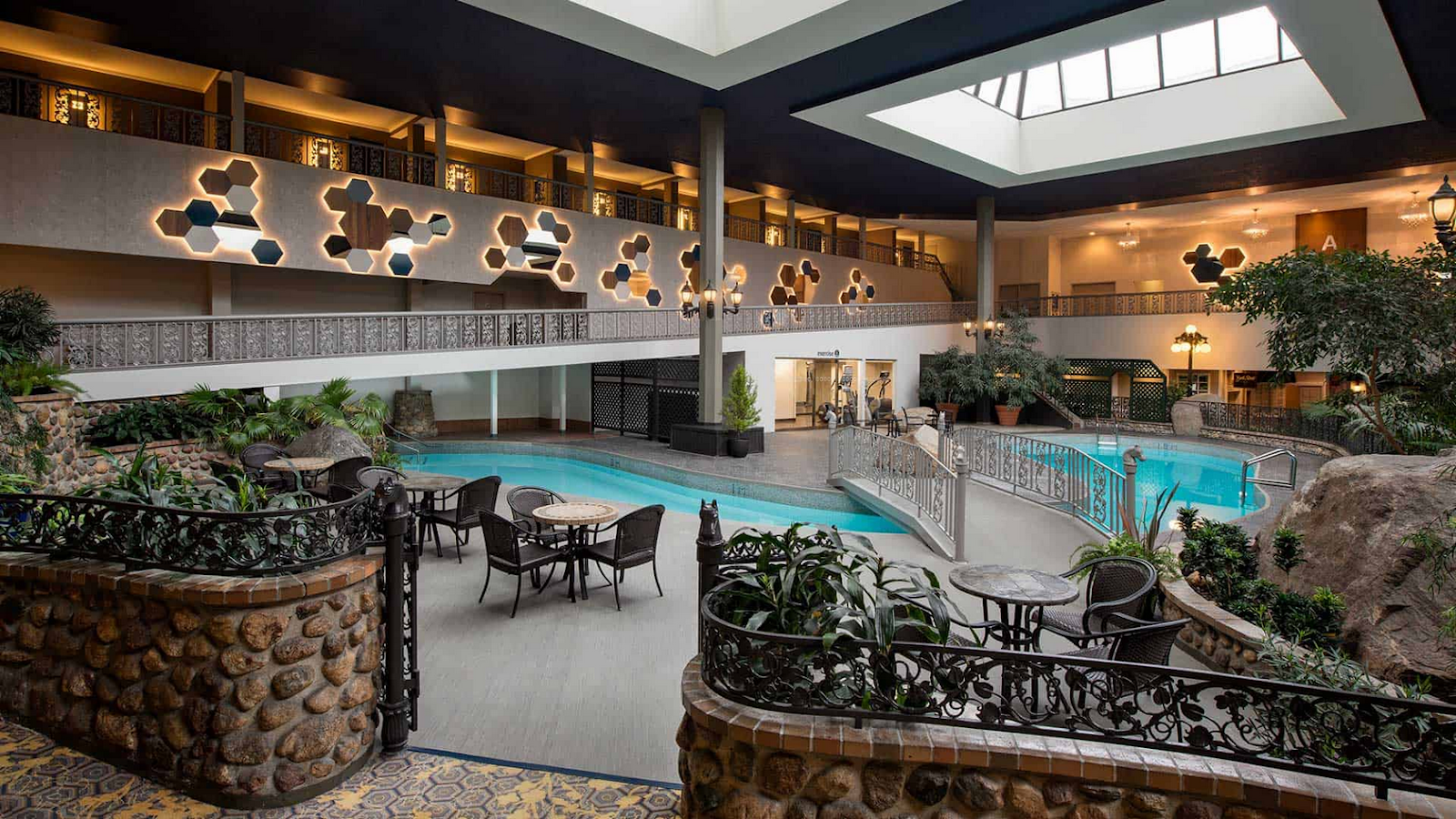
When hosting 500+ guests, the transition between sessions is where most logistical failures occur. In a large-scale setting, a simple hallway can become a bottleneck that delays your entire schedule. To mitigate this, we utilize Event Flow Mapping (EFM). This process involves analyzing the “dwell time” in high-traffic areas like the Tropical Garden and the foyer outside the main ballroom.

By designating specific “Express Lanes” for guests moving to breakout rooms and “Social Zones” for those lingering over coffee, you can maintain a 500-person transition in under 10 minutes. This is particularly vital for Saskatoon event planning logistics, where the efficiency of your schedule directly impacts the perceived value of the conference for high-level executives.

A Step-by-Step Timeline for Scaling Success

Planning for 500+ guests requires a longer lead time than smaller meetings. Follow this chronological checklist to stay on track.

12–18 Months Out: Foundation

  • Confirm venue availability for your preferred dates.
  • Secure a guest room block for at least 60% of your expected attendance.
  • Review the venue’s floor plans to ensure the largest room can accommodate 500 people in your desired seating style.

6–9 Months Out: Programming

  • Finalize keynote speakers and their technical riders.
  • Open early-bird registration to gauge interest.
  • Contract a local Saskatoon AV provider or confirm the venue’s in-house capabilities.

3 Months Out: Detail Management

  • Conduct a site visit to walk the “Guest Path” from the lobby to the session rooms.
  • Finalize banquet menus, ensuring options for diverse dietary requirements.
  • Confirm the bandwidth capacity for your specific event dates.

1 Month Out: Final Logistics

  • Lock in final registration numbers.
  • Submit the final floor plan to the catering and setup teams.
  • Prepare the digital components of the event (apps, polling, streaming).

Common Mistakes in Large-Scale Planning

  1. Underestimating Registration Space: If you have 500 people arriving within a 60-minute window, two registration desks will cause a massive backlog. You need a dedicated foyer with at least five check-in stations.
  2. Ignoring “Dead Zones”: In a room for 500, the people in the back rows often feel disconnected. You must include delay speakers and large-format screens to keep the back of the room engaged.
  3. Inadequate Power: Modern attendees carry 2.5 devices on average. A room for 500 requires significantly more charging infrastructure than a standard ballroom provides.
  4. Poor Signage: In full-service conference hotels in Saskatoon, guests can get lost between the restaurant and the meeting wing. Digital signage is a requirement for 2026.

What To Do If Something Goes Wrong

Even with the best planning, large-scale events face unpredictable challenges. Here is how to handle the most common issues:

  • AV Failure during Keynote: Always have a “Slide deck on a thumb drive” and a secondary laptop connected and synced. If the primary feed dies, the switch should take less than 10 seconds.
  • Attendance Exceeds Room Capacity: If late registrations push you over the 500-mark, work with the venue to set up a “Live Stream Overflow” in a smaller adjacent room or the versatile conference spaces nearby.
  • Catering Delay: If the kitchen is running behind, keep the bar open or extend the networking session in the foyer. Communication with the emcee is vital here to manage the audience’s expectations.

The Importance of On-Site Amenities

For the best Saskatoon hotels for business conferences, the amenities outside of the meeting room are just as important as the AV. When 500 people stay on-site, they need access to high-quality food and fitness options without leaving the property.

The Saskatoon Inn & Conference Centre offers a unique tropical courtyard that serves as a mental “reset” for delegates between intense sessions. This type of environment is backed by productivity research, which suggests that natural light and greenery reduce conference fatigue.

For more information on national standards for event planning, you can consult Discover Saskatoon (Conventions) or read the latest on global trends at Event Manager Blog by Skift.

FAQ

Q: What is the maximum capacity for conferences at the Saskatoon Inn? A: The Saskatoon Inn & Conference Centre features over 26,000 square feet of space, with our largest ballroom capable of hosting up to 500+ guests, depending on the seating configuration. We offer 18 flexible meeting rooms to accommodate various breakout needs.

Q: Do you offer specialized AV support for hybrid conferences? A: Yes, we provide modern AV infrastructure designed for 2026 standards, including high-speed dedicated internet for streaming and professional audio-visual setups. Our team can coordinate with your external providers or manage the technical requirements in-house.

Q: Is there enough parking for 500 conference delegates? A: We offer extensive on-site parking for all guests and event attendees. Our location near the Saskatoon Airport also makes it easy for out-of-town delegates to arrive via taxi or rideshare, reducing the need for personal vehicle storage.

Q: Can you accommodate complex dietary restrictions for large banquets? A: Our culinary team is experienced in managing large-scale catering while addressing various dietary needs, including gluten-free, vegan, and allergy-specific requirements. We recommend finalizing these details 30 days before your event.

Q: How do guest room blocks work for large conferences? A: We offer dedicated group guest room blocks to ensure your attendees stay on-site. This simplifies logistics, as delegates can move easily between their rooms and the conference wing without external transportation.

Q: What is the closest airport for national delegates? A: We are located just minutes away from the Saskatoon John G. Diefenbaker International Airport (YXE). This makes our venue the most convenient option for large-scale conferences involving national or international travellers.

Conclusion

Scaling an event to 500+ guests is a feat of engineering as much as it is a feat of hospitality. By focusing on the logistics of large-scale conferences, prioritizing airport accessibility, and utilizing proven, structured frameworks and methods, you can ensure a professional and seamless experience. The key is to choose a venue that understands the specific demands of high-capacity events—from high-density Wi-Fi to rapid catering turnovers.

If you are ready to elevate your next corporate gathering, our team is here to help you navigate every technical and logistical detail. Contact us today to lock in your event dates and experience the premier conference destination in Saskatoon.

Share this article

Follow us

Table of Contents:
Have A Question?

Our team is always ready to answer any questions you might have. 

Latest Articles

More Articles

Celebrate the Day, Celebrate Your Stay